100%

Read our minds

Subscribe to ThinkSpace

Have questions? We have the answers

View FAQs

Locate and connect with us globally

Contact us

Stay one thought ahead. Get our latest insights in your inbox.

    By clicking submit, I agree to GIC’s Privacy Statement

    Thank you for subscribing.

    Please check your inbox for a confirmation email.

    Sorry, it seems like something went wrong.

    Please try again

    Risk Management

    Close

    How we invest

    Risk Management

    Investing involves prudent risk-taking. Identifying and managing risk is a core responsibility shared by all at GIC. Each employee has individual accountability and clearly defined responsibilities within our risk management framework.

    Risk Management Objectives

    Our investment approach is focused on generating good long-term returns by constructing a portfolio that is resilient to macroeconomic and market pressures, while also being aligned with the Client’s risk tolerance.
    To protect the Client’s interests and avoid permanent impairment to the portfolio, GIC’s risk management objectives aim to:

    1. Ensure that risk-taking activities are in line with the Client’s mandate, long-term return objective, and risk tolerance;
    2. Ensure that the risks associated with each investment are duly evaluated and understood;
    3. Establish appropriate policies, guidelines, and control processes to reduce the likelihood of significant losses to assets under management; and
    4. Take the necessary precautions to manage any reputational impact to the Client and GIC.

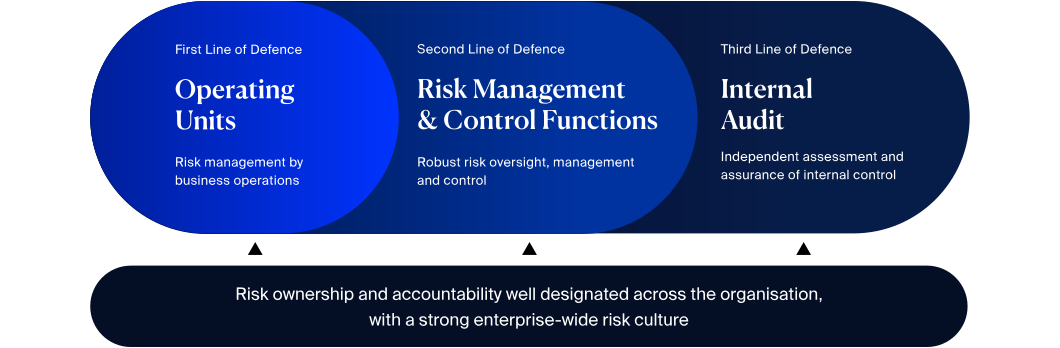
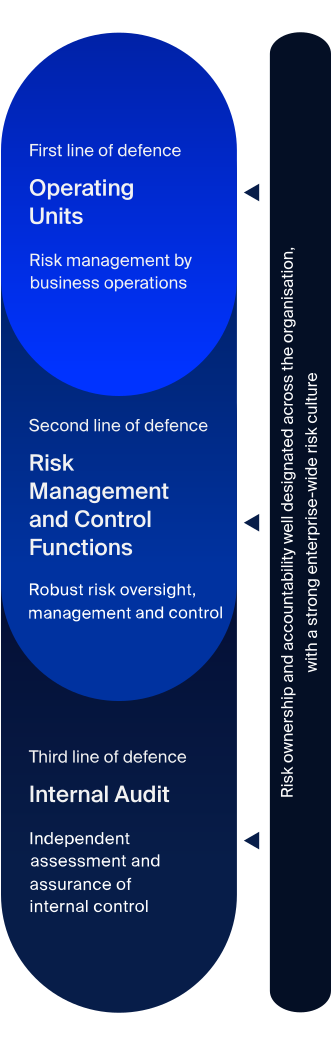
    Three Lines of Defence

    Our risk management model operates along ‘Three Lines of Defence’ ensuring that risk ownership and accountability across the organisation is transparent and clearly articulated.

    Our Approach

    Our approach to risk management is multi-pronged. This does not mean that there are no risks within the portfolio, but that risks within the portfolio are looked at in a comprehensive manner.

    • Managing Portfolio Investment Risk
    • Managing Legal, Regulatory, and Compliance Risks
    • Managing Operational Risk
    • Managing Cybersecurity, Technology, and Information Risk
    • Managing Counterparty Credit Risk
    • Managing Business Disruption Risk
    • Managing Reputational Risk
    • Managing People Risk

    Back to top